Get a quoate
Modular Cleanrooms for Electronic Semiconductor Applications: High Efficiency, Energy Savings, Cost Reduction
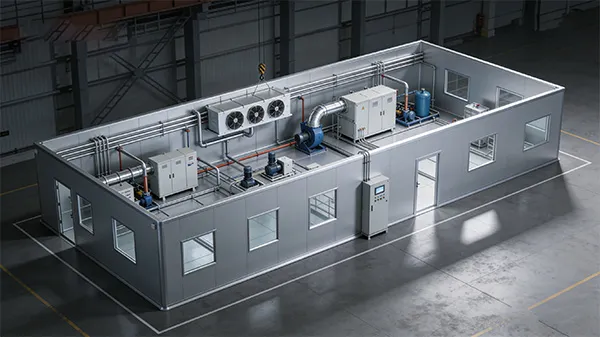
Published : 2025-12-16Modular Cleanrooms represent a specialized architectural and engineering solution essential for the semiconductor industry. As the “sterile heart” of microelectronics production, these environments utilize advanced filtration and prefabricated structural components to maintain ultra-low particulate counts, precise temperature gradients, and humidity control. Companies like BOBEN Modular Cleanroom Manufacturers have pioneered these systems to meet the rigorous demands of sub-7nm process nodes while optimizing operational efficiency.
The “Sterile Heart” of Semiconductor Fabrication
In the transition from raw silicon to finished integrated circuits, the cleanroom serves as the critical infrastructure sustaining the industry’s lifeblood.
- Stringent Standards: Cutting-edge processes (below 7 nanometers) require an environment meeting ISO Class 3 standards. This means airborne particles (≥0.1 microns) must be fewer than 1,000 per cubic meter—a level of precision equivalent to allowing only a handful of dust particles in a space the size of a football field.
- Contamination Impact: The destructive power of contaminants increases exponentially as particle size decreases. A single 0.1-micron particle can cause a short circuit in a 14-nanometer chip. Common contaminants—such as human skin flakes or equipment volatiles—can cause wafer yield to plummet by over 30%.
- Verified Effectiveness: Data from a 3-nanometer logic chip factory demonstrates that an ISO Class 1 cleanroom environment reduces defect rates by 90% compared to standard cleanrooms, fully highlighting the decisive value of high-end filtration technology (HEPA/ULPA filtration efficiency ≥99.9995%).
2.Core Advantages: Efficiency and Cost Control
Modular cleanrooms shift the focus from traditional civil engineering to high-performance industrial product design.
2.1 High-Efficiency Energy Logic
Cleanroom operations typically account for 30%–50% of a semiconductor plant’s total energy consumption. Modular solutions reduce this through:
- Precision Sealing: Prefabricated components ensure superior airtightness compared to on-site construction.
- Dynamic Load Management: Integration of Frequency Conversion Ventilation Systems allows air volume adjustments based on real-time production needs, reducing energy consumption by over 25%.
2.2 Lifecycle Cost Reduction
| Phase | Cost-Saving Mechanism | Impact |
| Construction | Prefabricated assembly vs. traditional civil works. | Cycle time reduced by 40%–60%; Labor costs down 30%. |
| Operation | Optimized airflow and high-efficiency HEPA systems. | Significant reduction in monthly utility overhead. |
| Maintenance | Standardized components for HVAC and filtration. | Repair downtime reduced by 50%. |
| Strategic | Demountable and expandable structures. | Mitigates risk of fixed-asset idle time during capacity shifts. |
3. Technical Specifications and Industry Application
The technical core of semiconductor-grade modular cleanrooms lies in “precise industry alignment.”
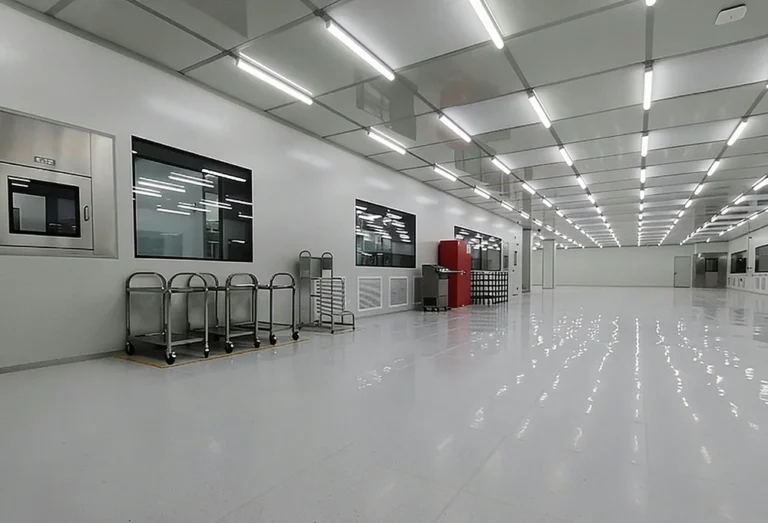
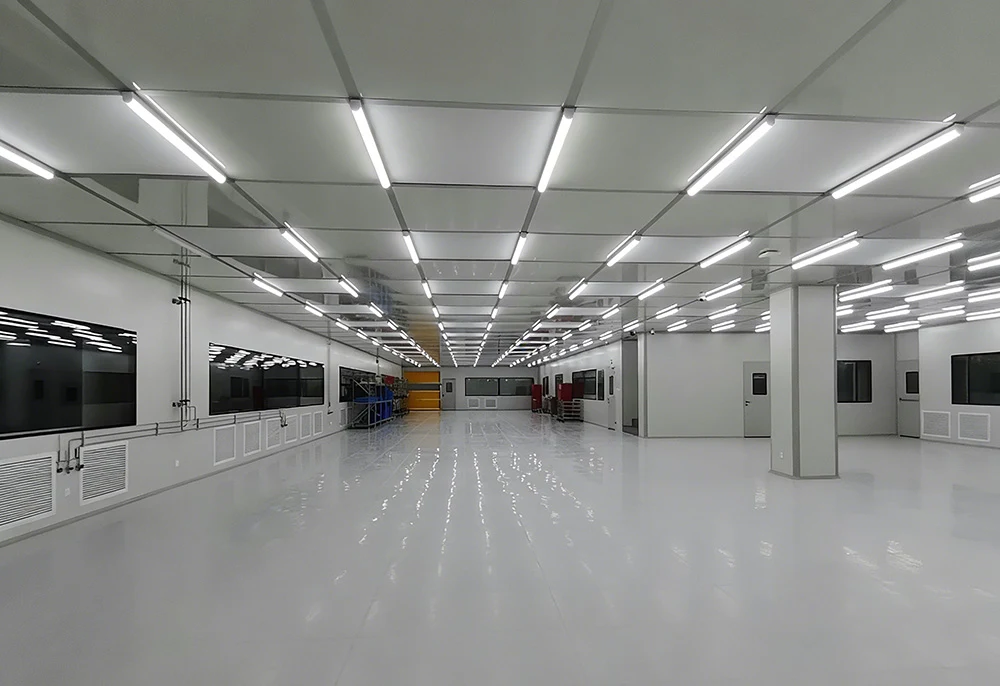
- Material Science: Utilization of fire-retardant, anti-static color steel plates and aluminum profiles to prevent dust accumulation and electrostatic discharge (ESD).
- Environmental Stability: Advanced systems maintain temperature fluctuations within ±1°C and humidity fluctuations within ±5%, which is critical for high-precision lithography and packaging processes.
- Zonal Control: Implementation of tiered cleanliness zones (Core Production, Buffer, and Auxiliary areas) ensures energy is not wasted on non-critical spaces.
4. Case Study: Kuala Lumpur’s Rapid Expansion
A Southeast Asian semiconductor packaging plant required urgent capacity expansion to meet contract deadlines. Traditional construction was estimated at 6 months.
By partnering with BOBEN Modular Cleanroom Manufacturers, the facility completed a 200㎡ ISO Class 6 cleanroom in just 2 months (from production to assembly).
Result: Post-commissioning data showed operating energy consumption was 28% lower than traditional facilities, saving approximately $120,000 USD in annual electricity costs.
5. Technical Support and Industry-Specific Parameters
Modular cleanrooms for electronic semiconductor applications center on “precision-matching industry-specific requirements.” In product design, boben Modular Cleanroom Suppliers prioritizes optimizing the following key technologies:
| Adaptation Requirements | Technical Solution | Industry Standard Requirements |
| Air cleanliness | High-Efficiency Particulate Air (HEPA) Filter + Zone Ventilation System | ISO Class 5 (Class 100) – ISO Class 8 (Class 100,000) |
| Temperature and Humidity Control | Inverter Air Conditioning + Precision Sensor Regulation | Temperature: 20–24°C (fluctuation ±1°C), Humidity: 45%–60% (fluctuation ±5%) |
| Anti-static Performance | Anti-static Color-coated Steel Panel + Grounding System | Surface Resistance: 10⁶–10¹¹Ω |
| Anti-Micro-Vibration Design | Vibration-Damping Aluminum Profile Frame + Cushioning Foundation Pads | Vibration Acceleration ≤ 0.3g |
| Sealed and Contamination-Free | Silicone Sealant + Seamless Jointing Process | Dust Concentration ≤0.5μm Particle Count Compliant with Corresponding ISO Class |
In material selection, fire-retardant, low-volatility color-coated steel sheets and aluminum profiles are used to prevent the release of harmful substances that could contaminate the production environment. During installation, the high standardization of components eliminates the need for complex tools on-site. Even for overseas projects, assembly can be swiftly completed via video guidance, resolving communication and technical challenges in cross-border construction.