Get a quoate
How Much Does a Class 100 Modular Cleanroom Cost in 2026? A Detailed Budget Guide.
Published : 2026-01-09With the rapid advancement of the semiconductor, precision optics, and high-end biopharmaceutical industries, enterprises increasingly demand high-cleanliness production environments. Looking ahead to 2026, fluctuations in raw material costs, rising labor expenses, and the widespread adoption of intelligent technologies will significantly impact cleanroom construction costs. This article provides a comprehensive budget guide for ISO Class 5 modular cleanrooms, helping you precisely manage your investment.
What is a “Class 100 modular cleanroom meeting 2026 standards”?
- Definition of Class 100 (ISO Class 5): This represents an extremely high standard of cleanroom environment. According to ISO 14644-1 standards, the number of particulate matter ≥0.5μm per cubic meter of air must be controlled below 3,520 particles. Achieving this standard typically requires 100% FFU (Fan Filter Unit) coverage or extremely high air changes per hour (typically 250-400/h), combined with unidirectional flow (laminar flow) design.
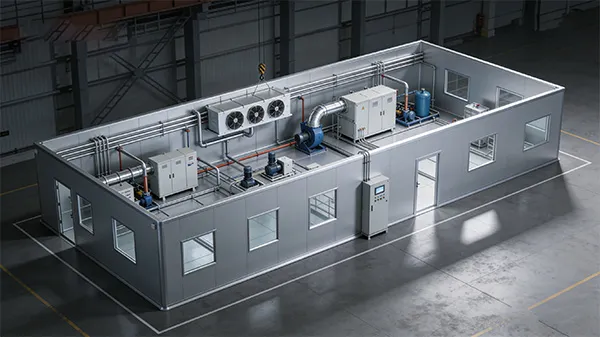
- Modular characteristics: Unlike traditional construction, modular cleanrooms utilize industrialized prefabricated components (such as cleanroom wall panels, grid frames, and self-powered FFUs). They assemble like building blocks, offering disassembly, scalability, and rapid installation.
- Emerging Trends for 2026: By 2026, while base material costs like aluminum and copper may see modest increases, technological advancements from leading manufacturers such as Boben Modular Cleanroom Manufacturers will introduce smarter control systems (energy-efficient) and higher levels of prefabrication. These innovations will effectively offset some hardware costs, making overall construction more cost-effective.
What is the cost difference between softwall and hardwall Class 100 cleanrooms?
Answer: The gap is substantial, typically ranging between 30% and 50%.
- Soft Curtain Type: Utilizes anti-static PVC curtains for enclosure. Offers low cost and fastest installation, but provides limited temperature and humidity control. Suitable for small-area localized purification (e.g., clean booths).
- Rigid Wall Type: Constructed with color-coated steel panels, tempered glass, or acrylic sheets, this design offers excellent airtightness, maintaining high pressure differentials and precise temperature/humidity control. It is the mainstream choice for Class 100 environments but carries a higher cost.
Why do some quotes range from hundreds to thousands of dollars per square foot?
The core difference lies in “system integration.” Low-cost options typically include only “envelope structures + fans,” excluding precision air conditioning systems for constant temperature and humidity, raised floor installations, and intelligent controls. Class 100 environments demand extremely precise airflow organization. Adding raised floors, return air ducts, and high-precision temperature/humidity control (constant temperature and humidity) can multiply the cost significantly.
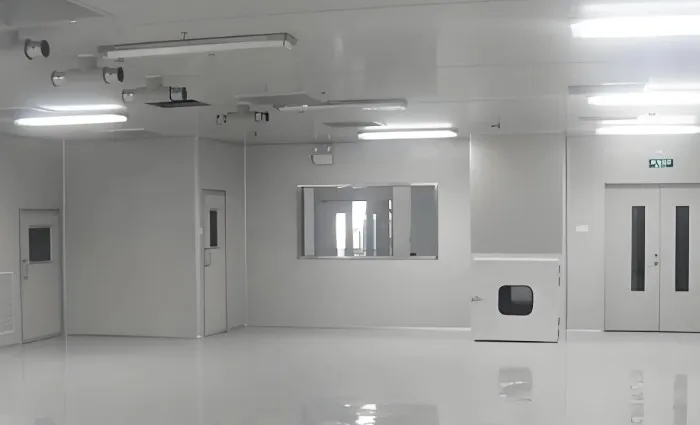
Investment Advantages of Choosing Modular Solutions
In the 2026 market environment, choosing modular cleanrooms over traditional construction offers significant financial advantages:
- Asset Preservation and Tax Advantages: Traditional cleanrooms are classified as building renovations with extended depreciation periods. In contrast, modular cleanrooms are treated as “equipment assets” with shorter depreciation cycles. During facility relocations, over 90% of materials can be disassembled and reused, significantly protecting fixed asset investments.
- Ultimate Time Cost Reduction: “Time is money” holds particularly true in the tech industry. Traditional engineering projects take 3-6 months, while modular solutions typically deliver within 15-30 days. For products racing to capture market windows, this translates to generating cash flow months earlier.
- Flexible Capital Expenditure (CAPEX): You can start by building the smallest unit that meets your current production capacity, then expand at low cost as your business grows—like assembling LEGO blocks. This flexibility is one of the core selling points offered by specialized manufacturers like boben Modular Cleanroom Manufacturers.
Step-by-Step Budgeting Guide (Including 2026 Projected Data)
To construct a qualified Class 100 cleanroom, it is recommended to follow these four steps for budget planning.
Step 1: Define the Basic Parameters (Cost Multipliers)
- Area and Height:The larger the area, the lower the cost per square meter.The greater the height (exceeding 2.5m), the higher the costs for blind plates and return air ducts.
- Temperature and Humidity Requirements:If constant temperature and humidity are required (e.g., 22±0.5°C), the HVAC system cost will account for over 40% of the total budget.
Step 2: Hardware Cost Breakdown (Based on 2026 Estimated Average Prices)
The following table forecasts the cost range for hard-walled modular Class 100 cleanrooms in 2026 based on industry trends (excluding civil engineering and floor hardening):
| Cost Item | Percentage | Estimated Unit Price in 2026 (Per Square Foot USD) | Key Configuration Notes |
| Envelope | 15% – 20% | 10.32–19.35 | Anti-static mesh curtain vs 50mm hollow magnesium oxide color steel panel/tempered glass |
| Air Purification System (FFU) | 30% – 40% | 38.71–64.51 | Class 100 rooms require full coverage with FFUs (coverage rate approaching 100%), including HEPA/ULPA filters. |
| HVAC (Heating, Ventilation, and Air Conditioning) | 20% – 35% | 25.81–77.42 | Industrial precision air conditioning, determined based on thermal and humidity load requirements and precision specifications. |
| Electrical and Control Engineering | 10% – 15% | 6:45–3:48 | Smart PLC control, LED cleanroom lighting, and particle sensor interlocking |
| Groundwork | 5% – 10% | 3.87–10.32 | Anti-static PVC flooring or aluminum alloy raised flooring (Class 100 recommended raised flooring) |
| Installation and Verification | 10% | – | Labor costs, travel expenses, and third-party cleanliness testing fees |
| Total Cost Estimate | 100% | 77.42–193.55+ | Depending on the specific configuration level |
((Note: Data is for reference only. For actual pricing, please contact us at Baiben Cleanroom Manufacturer via Whatsapp:+8613862527051)
Hidden Costs and Operating Expenses (OPEX)
When budgeting, never overlook annual operating costs. Class 100 cleanrooms are energy hogs—with FFUs and precision air conditioners running 24/7, electricity bills become a massive expense. When procuring equipment, prioritize energy-efficient solutions featuring brushless DC motors (EC Motors) from boben Modular Cleanroom Manufacturers. Though the initial investment is slightly higher, the cost difference is typically recouped through electricity savings within 1-2 years.
Installation and Verification Acceptance
The budget must include provisions for DQ/IQ/OQ/PQ validation costs. For Class 100 environments, static and dynamic testing must be performed using laser particle counters to ensure compliance with ISO Class 5 standards.
Below are two real-world examples of benefits achieved through modular solutions:
A certain optical communications chip startup
- Challenge: Rapidly establish a 200-square-meter Class 100 lithography area within an office building, subject to limited floor load capacity.
- Solution: Custom lightweight aluminum profile frame modular cleanroom.
- Results: The total project cost was controlled within RMB 1.8 million (including air conditioning). From order placement to completion of commissioning took only 25 days. By adopting energy-efficient FFUs, the first-year electricity costs were reduced by 25% compared to the budget. Product yield rate jumped directly from 65% in standard environments to 98.5%.
Cross-border Medical Device Catheter Production Line
- Challenge: A 30-square-meter Class 100 injection molding zone needed to be locally upgraded within an existing Class 100,000 cleanroom.
- Solution: The “clean enclosure + raised floor” combination solution provided by boben Modular Cleanroom Manufacturers was selected, enabling direct “nested” installation within the existing facility.
- Result: Avoided full workshop shutdown for renovation. Installation completed within just two weekend days. Third-party testing confirmed the localized area consistently met ISO Class 5 standards. Successfully passed an FDA unannounced inspection, significantly reducing compliance costs.
By 2026, the cost of Class 100 modular cleanrooms will become more transparent and polarized. Achieving optimal results within budget hinges on precisely defining requirements and selecting professional suppliers with system integration capabilities. We hope this guide provides robust support for your project planning.