Get a quoate
7 Critical Considerations for Modular Pharmaceutical Cleanroom Design
Published : 2026-03-05Cleanroom facilities serve as the core foundation of the pharmaceutical cleanroom industry. They are essential for ensuring the product quality of drugs, medical devices, and primary packaging materials, as well as the safety of hospital preparations. A controlled environment is the fundamental requirement to prevent contamination during production; therefore, all operational areas must strictly adhere to specified environmental parameters.
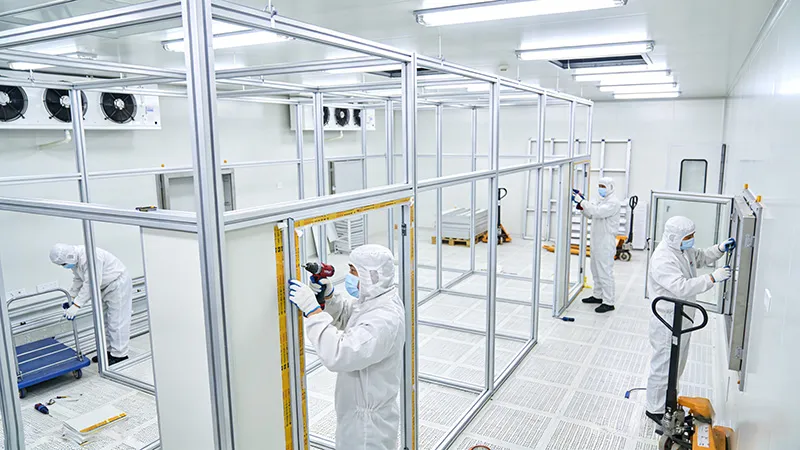
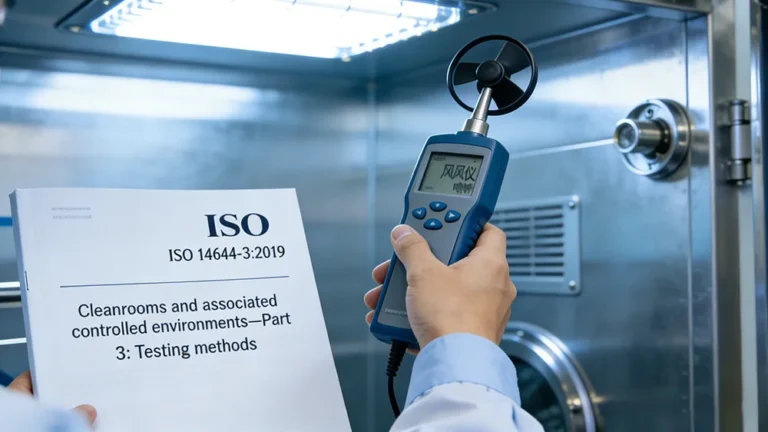
To ensure sustained compliance, new cleanrooms must undergo a two-stage engineering acceptance process: Project Completion Acceptance and Comprehensive Performance Evaluation. The former is conducted under “as-built” or “at-rest” states, while the latter is determined through consultation between the client, designer, and contractor, followed by testing from a certified third party. Furthermore, operational cleanrooms must undergo periodic performance testing.
1.Excessive Design and Construction Standards
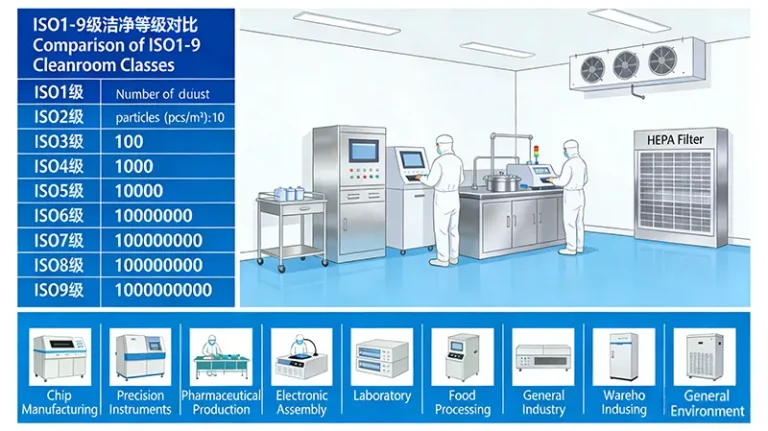
- Uniform Over-Engineering: In facilities with cleanliness requirements ranging from ISO Class 7 (10,000) to ISO Class 8 (300,000), designers often apply the strictest Class 7 standard to the entire suite. While this simplifies system debugging and construction, it significantly inflates initial investment and energy consumption.
- Grade Inflation: Some plants designed for oral solid dosage forms (which only require Class 300,000 under 1998 GMP revisions) are built to Class 100,000 standards. Additionally, ceiling heights are often set unnecessarily high.
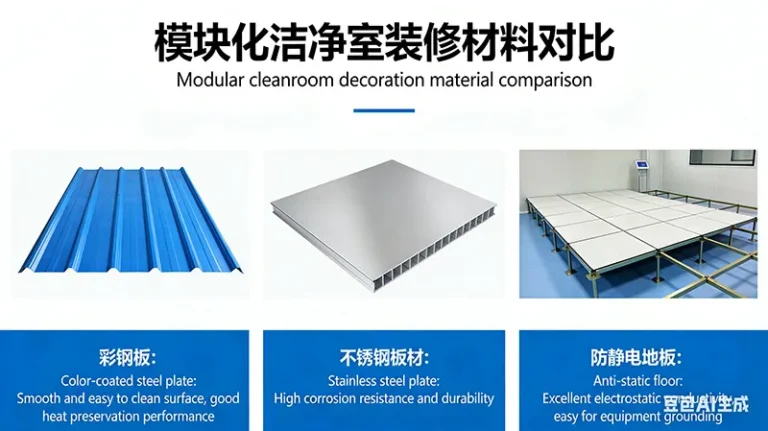
- Flexible Solutions: To accommodate future growth, companies should consider modular pharmaceutical cleanrooms or mobile cleanrooms. These allow for staged expansion or “flexible production” without high upfront costs. By utilizing a modular cleanroom system or prefabricated cleanrooms, you can customize cleanliness levels by process, significantly reducing initial investment and long-term operating expenses.
2.Improper Air Change Rates
Air change rates, pressure differentials, and suspended particle counts are the three pillars of cleanroom performance. Whether utilizing dilution in turbulent flow or displacement in unidirectional flow, maintaining specific parameters relies entirely on the volume of clean air. Therefore, air change rates must not fall below the calculated safety threshold for the specific cleanliness grade.
3.Avoid “Top-Supply, Top-Return” Airflow Patterns
Due to budget constraints, some cleanrooms still use a “Top-Supply, Top-Return” configuration. While cost-effective, it results in several critical failures:
- Large Particle Accumulation: Particles ≥5μm often accumulate at the “breathing zone,” causing the room to fail 5-micron standards even if 0.5-micron counts are acceptable.
- Low Velocity: In “Local Class 100” areas, the working zone air velocity is often too low to meet standards.
- Extended Recovery Time: Tests show that self-cleaning (recovery) times are often twice as long as side-return systems. This pattern is inefficient at removing dynamic pollutants and is generally not recommended.
4.Risks in “Local Class 100” (ISO 5) Zones
Some facilities see a higher defect rate after installing Local Class 100 zones. Common causes include:
- HEPA Filter Defects: Use of substandard filters that were not individually leak-tested at the factory.
- Poor Installation: Filters secured with self-tapping screws rather than proper compression bolts and gaskets will loosen over time, causing bypass leakage.
- Airflow Interference: Improper placement of background turbulent supply outlets near the unidirectional flow (Class 100) unit can cause turbulence that pulls contaminants into the critical zone.
- Human Factor: Personnel failing to adhere to strict gowning protocols; contaminants from cleanroom suits are accelerated by the high-velocity air directly onto the production line.
5.Improper Facility Layout
The arrangement of equipment often overlooks its impact on airflow patterns:
- Single-Side Returns: In non-unidirectional flow rooms, single-side returns increase “vortex zones” and the risk of cross-contamination.
- Return Air Placement: Return air grilles are often placed too close to the working zone or on the wrong side of the operator.
- Equipment Position: Exhaust-heavy equipment and residual pressure valves should be placed on the downwind side of the clean airflow to prevent backflow of contaminants.
6.Insufficient Number of Air Supply Outlets
To save on investment, the number of supply outlets is often reduced. Even if the total air change rate remains the same, fewer outlets lead to higher discharge velocities. This increases velocity field non-uniformity, causing larger vortex zones where particles can become trapped.
7.Improper Filter Selection
Filter selection should follow these professional guidelines:
- Reliable Final Stages: The terminal filter’s performance is non-negotiable and must be individually tested.
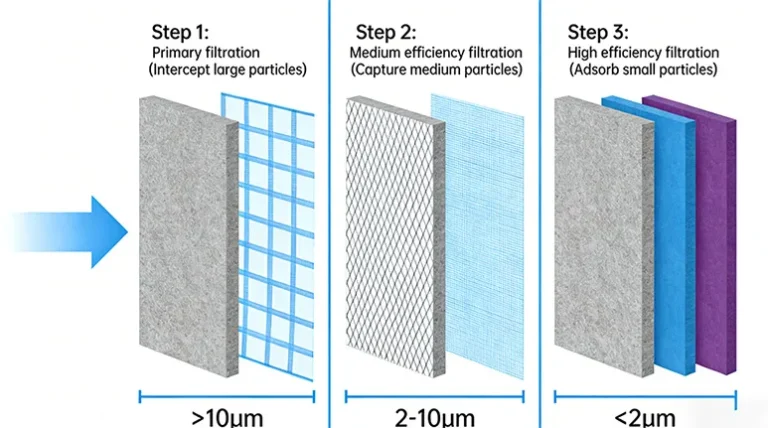
- Logical Pre-filtration: The efficiency of pre-filters must be matched to the terminal filter to prevent premature clogging.
- Surface Area Matters: Whenever possible, choose filters with a larger media area. Larger filtration areas offer higher dust-holding capacity, longer service life, lower resistance (pressure drop), and reduced energy consumption for the HVAC system.